
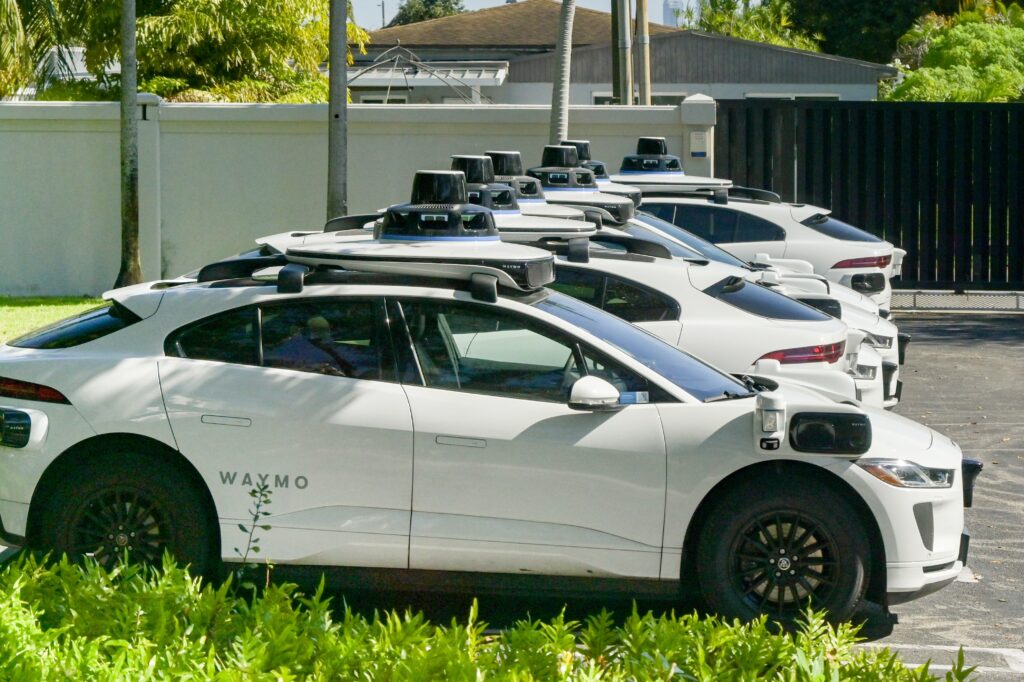
Waymo has officially launched as Miami's first fully driverless ride-hailing service as of January 2026, marking a significant shift in local South Florida transportation. While this autonomous technology offers potential safety benefits by removing human error from the equation, recent incidents in other cities highlight the importance of understanding your legal rights as these robotaxis navigate our busy streets. If you are involved in a collision with a self-driving car, a Waymo self-driving car accident lawyer can help you navigate the complex liability issues that arise when a human driver isn't behind the wheel.
The Launch of Waymo Self-Driving Cars in Miami
The arrival of Waymo in January 2026 represents a landmark moment for Florida’s tech landscape. After years of testing in cities like Phoenix and San Francisco, Waymo has deployed its fleet of fully autonomous Jaguar I-PACE vehicles across the Magic City. This rollout is supported by a partnership with Moove, a global fleet manager that handles the maintenance and operations of the Waymo fleet locally.
While the convenience of hailing a car via an app without a driver is revolutionary, it introduces new dynamics to Miami’s already chaotic traffic. For residents and tourists alike, seeing a vehicle navigate the MacArthur Causeway or the streets of Wynwood with an empty driver’s seat is now a daily reality—one that comes with a unique set of safety considerations.
Understanding the Risks: Waymo Accidents in Other Cities
As this technology enters our city, it is important to look at the track record of these vehicles in other markets. While Waymo emphasizes its safety record, the technology is not infallible, and real-world data from other "Waymo cities" shows that malfunctions and collisions do occur.
Recent Safety Concerns and NHTSA Investigations
In January 2026, a high-profile incident occurred in Santa Monica where a Waymo vehicle was involved in a school-zone collision with a child. This prompted the National Highway Traffic Safety Administration (NHTSA) to open a formal investigation into the software's ability to detect and react to pedestrians in sensitive zones. This serves as a sobering reminder that even the most advanced sensors can struggle with the unpredictable nature of school crossings and heavy foot traffic.
Pattern of Traffic Violations and Software Recalls
Beyond major collisions, Waymo has faced criticism for "behavioral" errors. In Austin, the school district reported 19 separate cases where Waymo robotaxis illegally passed stopped school buses. Additionally, in 2024, Waymo issued a voluntary recall of over 1,200 vehicles following a software glitch that caused cars to misinterpret roadside barriers, leading to several low-speed collisions. These incidents demonstrate that Waymo crash risks are often tied to software edge cases that the AI hasn't yet mastered.
What Happens if a Waymo Gets in an Accident?
When two human drivers collide, the process is straightforward—police take statements, insurance companies exchange info, and fault is determined based on driver behavior. With a robotaxi, the script is flipped.
Determining Liability in a Driverless Car Crash
Liability in an autonomous vehicle accident is a multi-headed beast. Depending on the cause of the crash, the responsible party could be:
- Waymo/Alphabet: If the software failed to perceive an obstacle or violated a traffic law.
- The Vehicle Manufacturer: If a mechanical failure, such as a braking defect, caused the collision.
- Moove (Fleet Operator): If improper maintenance of the Miami fleet led to a sensor or hardware malfunction.
Why You Need a Waymo Self-Driving Car Accident Lawyer
Because there is no human driver to exchange insurance information with, the claims process is non-standard and highly technical. You aren't just dealing with an insurance adjuster; you are dealing with a multi-billion-dollar tech giant and its proprietary data. Hiring a trusted attorney is essential for subpoenaing the vehicle’s "black box" data, which records exactly what the car saw (or failed to see) in the seconds leading up to the impact.
Contact Levin Law P.A. Today
If you or a loved one has been involved in a collision with a Waymo vehicle in Florida, do not attempt to navigate the corporate legal system alone. The transition to autonomous transit brings new risks, and our team is dedicated to ensuring that technology companies are held accountable for the safety of our community.
Protect your rights and ensure you receive the compensation you deserve. To speak with a legal professional about your case, call us at (305) 402-9050 or send us a message to schedule your consultation today.
Frequently Asked Questions About Waymo in Florida
What is Waymo?
Waymo is an autonomous driving technology company and a subsidiary of Alphabet Inc. (the parent company of Google). It operates a commercial ride-hailing service using "Waymo Drivers," which are integrated systems of sensors and software that operate vehicles without human intervention.
Where is Waymo available?
As of early 2026, Waymo is available to the general public in Phoenix, San Francisco, Los Angeles, and now Miami and Orlando. It also has ongoing testing and limited operations in other major US cities.
Is Waymo safe?
While Waymo’s data suggests that its autonomous system has a lower rate of injury-causing crashes compared to human drivers over millions of miles, it is not risk-free. Documented incidents involving software recalls and pedestrian collisions remain a point of contention for safety advocates.
How many accidents has Waymo had?
According to NHTSA data, there were over 1,400 incidents reported involving Waymo vehicles between July 2021 and November 2025. These incidents varied in severity, resulting in 117 injuries and 2 fatalities during that period.
Does Waymo use LiDAR?
Yes. Waymo vehicles utilize an array of sophisticated sensors, including LiDAR (Light Detection and Ranging), high-resolution cameras, and radar. This "sensor fusion" allows the car to see 360 degrees in the dark and in various weather conditions.
How often do Waymo cars crash?
The frequency is best measured by the "crash rate per million miles." While the raw number of crashes increases as the fleet grows, Waymo maintains that its crash rate is significantly lower than that of the average human driver in similar urban environments. However, when they do crash, the legal complexity is much higher.